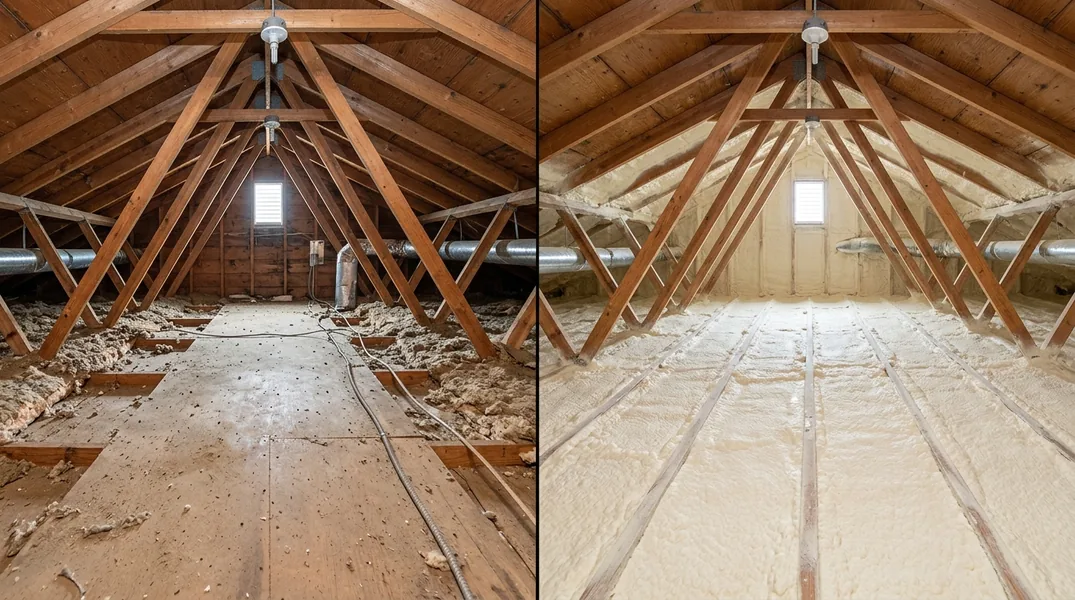
The Postwar Ranch Attic Problem in Waterloo
If you own a postwar ranch home in Waterloo, you likely appreciate the clean lines, efficient floor plans, and solid construction that made these homes so popular in the 1950s and 1960s. However, one area where these charming homes often fall short is attic insulation. Many postwar ranches were built with minimal insulation, and decades of settling, moisture exposure, and temperature fluctuations have left homeowners with inadequate thermal protection.
The typical scenario involves batts or loose-fill insulation that has compressed over time, leaving gaps and thin spots throughout the attic. This settled insulation loses its R-value effectiveness and creates cold spots in winter and heat gain in summer. The result is higher energy bills, uneven temperatures between rooms, and increased strain on your HVAC system. If you've noticed your heating and cooling costs creeping up or experienced comfort issues in upper-floor bedrooms, your attic insulation is likely the culprit.
Why Traditional Insulation Fails in Older Attics
Fiberglass batts and cellulose blown-in insulation were the standard choices when your postwar ranch was built. While these materials worked adequately at installation, they suffer from predictable degradation patterns. Fiberglass batts compress under their own weight, and cellulose settles as it absorbs moisture and experiences thermal cycling. Both materials leave voids around framing members, electrical wiring, and irregular attic geometry, which creates thermal bridging and reduces overall performance.
Moisture is another silent killer of traditional insulation. Waterloo experiences seasonal humidity swings and temperature extremes that encourage condensation in attics. Fiberglass absorbs moisture, which degrades its insulating properties and promotes mold growth. Cellulose is even more hygroscopic and becomes a liability in damp conditions. Neither material provides a vapor barrier, so moisture migration continues unchecked. After 50 to 70 years, the original insulation in your attic is likely performing at 50 percent or less of its rated R-value.
Spray Foam vs Blown In Insulation: Which Wins for Attics
When comparing spray foam vs blown in insulation, the performance differences are significant, especially in older attics. Blown-in insulation, whether fiberglass or cellulose, relies on density and depth to achieve its R-value. It cannot seal air leaks, cannot bridge gaps around obstructions, and continues to settle over time. In a postwar ranch attic with irregular framing, multiple penetrations, and decades of settling, blown-in insulation simply cannot deliver consistent coverage or long-term performance.
Attic Spray Foam Insulation expands as it cures, filling every crack, crevice, and gap in your attic space. It adheres to all surfaces, creating a seamless thermal envelope that blown-in insulation cannot match. Spray foam does not settle, does not absorb moisture, and maintains its R-value for the life of your home. A single application of spray foam eliminates the air leakage pathways that plague traditional insulation, reducing your heating and cooling load immediately.
Spray Foam vs Fiberglass and Cellulose: Performance Comparison
The comparison between spray foam vs fiberglass and spray foam vs cellulose reveals why spray foam has become the preferred choice for attic upgrades. Fiberglass batts have an R-value of approximately 3.2 to 3.8 per inch, while cellulose blown-in achieves about 3.5 per inch. Both are respectable ratings on paper, but only when installed perfectly and never disturbed. In reality, neither material maintains these values in older attics.
Closed Cell Spray Foam Insulation delivers R-6 to R-7 per inch and includes a built-in vapor barrier. Open Cell Spray Foam Insulation provides R-3.5 per inch but allows vapor transmission, making it ideal for attics where moisture management is important. Both types expand to fill gaps and create an air-sealed envelope that traditional materials cannot replicate. The real-world energy savings from spray foam are 20 to 40 percent higher than blown-in or fiberglass, depending on your climate and home design.
Best Insulation for Attic: Why Spray Foam Wins
When searching for the best insulation for attic applications, spray foam consistently outperforms alternatives in durability, effectiveness, and long-term value. The best insulation for attic must address three critical challenges: thermal resistance, air sealing, and moisture management. Spray foam excels in all three areas, while fiberglass, cellulose, and other blown-in options struggle with at least one.
Spray foam creates a monolithic seal that prevents air infiltration through the attic envelope. This is crucial because air leakage accounts for 30 to 40 percent of heating and cooling losses in many homes. Traditional insulation does nothing to stop air movement, so even a perfectly installed fiberglass or cellulose attic will lose efficiency through gaps and cracks. Additionally, spray foam does not require replacement or top-ups. Once applied, it continues to perform for decades, whereas blown-in insulation may need replenishment as it settles.
Attic Spray Foam Insulation Near Me: When to Call a Professional
If you live in Waterloo and own a postwar ranch with settling insulation, now is the time to act. Professional spray foam application requires specialized equipment, trained technicians, and proper safety protocols. This is not a DIY project. Improper installation can create air pockets, uneven coverage, and potential health hazards from chemical fumes. Waterloo Spray Foam Insulation has the expertise and equipment to properly assess your attic and apply spray foam insulation that meets all building codes and manufacturer specifications.
A professional evaluation will identify air leakage sources, moisture issues, and areas where your current insulation has failed. You may discover that your attic has roof leaks, inadequate ventilation, or pest damage that needs addressing before insulation is applied. These issues are easier to spot and fix during a professional inspection. Contact Waterloo Spray Foam Insulation at (319) 349-2560 to schedule a free estimate and discuss your attic upgrade options.
Attic Spray Foam Insulation Cost in Waterloo: What to Budget
Homeowners often ask about the cost of upgrading their attic insulation. While pricing varies based on attic size, complexity, and the type of spray foam selected, the investment typically pays for itself through energy savings within 5 to 10 years. Closed-cell spray foam costs more per square foot than open-cell, but delivers higher R-value and superior moisture protection. Open-cell spray foam is more economical and works well in attics where vapor permeability is desired.
The true cost of not upgrading is often higher than the cost of spray foam installation. Settling insulation forces your HVAC system to work harder, shortening its lifespan and increasing your utility bills year after year. A single winter or summer season of elevated energy costs can add up quickly. Spray foam is an investment in comfort, efficiency, and home value. For specific pricing information tailored to your attic, contact Waterloo Spray Foam Insulation at (319) 349-2560 or request a free estimate online. We serve Waterloo and surrounding areas with professional spray foam insulation solutions.
Looking for a professional spray foam insulation contractor in Waterloo? Waterloo Spray Foam Insulation responds fast for all your spray foam insulation needs.
Get a Free Quote