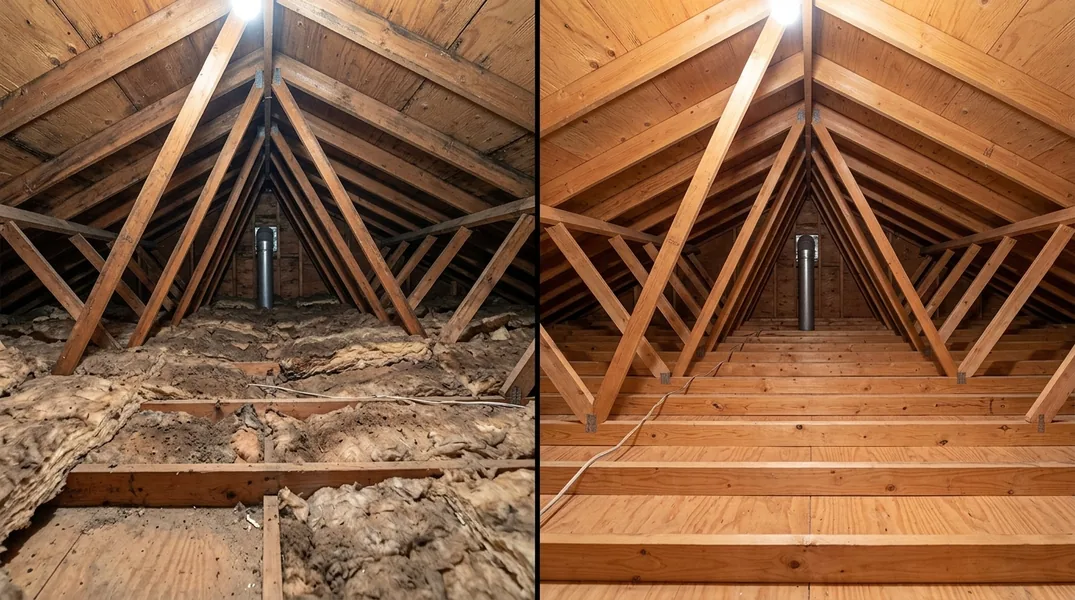
Why Early 1900s Homes in Waterloo Need Better Insulation
The charming early 1900s homes that line the Cedar River in Waterloo represent a significant piece of the city's architectural heritage. Many of these historic properties feature beautiful original woodwork, character-filled rooms, and solid construction that has stood the test of time. However, what made these homes durable does not necessarily make them energy-efficient by today's standards. Most homes built in that era relied on minimal insulation, loose fill materials that have settled over decades, or in some cases, no insulation at all.
The challenge for modern homeowners is balancing preservation with comfort and energy savings. These older structures often have irregular joist spacing, gaps around pipes and wiring, and attic configurations that don't fit standard insulation products. Winter heating bills can be substantial, and summer cooling becomes expensive when warm air escapes through an under-insulated attic. The Cedar River area experiences genuine four-season weather, meaning your heating and cooling systems work overtime if your home lacks proper thermal protection. This is where the question of whether to invest in modern insulation solutions becomes not just about comfort, but about long-term home value and sustainability.
Is Spray Foam Insulation Worth It for Historic Waterloo Homes?
Attic Spray Foam Insulation offers several compelling advantages for older homes that traditional insulation cannot match. The primary benefit is its ability to seal air leaks while simultaneously providing insulation value. Unlike fiberglass batts or cellulose, spray foam expands to fill irregular spaces, gaps around penetrations, and hard-to-reach corners that are common in early 1900s construction. This air sealing capability can reduce your heating and cooling costs by 15 to 30 percent, depending on your home's current condition and how thoroughly the foam is applied.
The return on investment depends on several factors specific to your situation. If your Waterloo home has significant air leaks, drafty rooms, or energy bills that seem high compared to neighbors' homes, spray foam typically pays for itself within 5 to 10 years through energy savings. For homeowners planning to stay in their early 1900s home long-term, this investment often makes financial sense. Additionally, spray foam can improve indoor air quality by reducing outdoor air infiltration, which is particularly valuable if you live near the Cedar River where moisture and seasonal allergens can be concerns. However, if your primary motivation is a quick resale, you should carefully evaluate whether the upfront cost aligns with your timeline and local market expectations.
Is Spray Foam Insulation Safe? Understanding Off-Gassing and Installation Concerns
Safety is a legitimate concern when considering spray foam insulation, and it deserves a straightforward answer. When properly installed by qualified professionals, spray foam is safe for residential use. The key word here is 'properly.' The safety concerns that homeowners often hear about typically stem from poor installation practices, inadequate ventilation during application, or using unqualified contractors. During the spray application process, the chemicals can emit volatile organic compounds (VOCs). This is why professional installers use respiratory protection, ensure proper ventilation, and follow strict safety protocols. Once the foam has fully cured, which typically takes 24 to 48 hours, off-gassing is minimal and poses no health risk to occupants.
Waterloo homeowners should know that spray foam insulation problems often arise from either improper application or using the wrong type of foam for the application. Closed Cell Spray Foam Insulation and Open Cell Spray Foam Insulation have different safety profiles and appropriate uses. Closed cell foam is denser and better for areas prone to moisture, while open cell foam is more breathable and appropriate for interior attic applications in dry climates. Working with experienced, insured contractors who understand your home's specific needs and local building codes is essential. Before hiring any contractor, ask about their certifications, insurance, and references from other local homeowners.
Spray Foam Insulation Pros and Cons: A Balanced Look
Understanding both the advantages and disadvantages of spray foam helps you make an informed decision for your historic home. The primary pros include superior air sealing, high R-value per inch of material, excellent performance in irregular spaces, long-term durability (typically lasting 80+ years), and improved moisture control in certain applications. Spray foam also provides structural support and can reduce outside noise infiltration, which appeals to many homeowners. For attics in older homes where traditional insulation has settled or deteriorated, spray foam can restore thermal performance that fiberglass or cellulose cannot match.
The cons warrant equal consideration. Spray foam insulation cost is significantly higher than traditional insulation options, typically ranging from 2 to 4 times the price per square foot. Once installed, it is extremely difficult and expensive to remove or modify, which matters if you ever need to access wiring, pipes, or make structural changes. Some people report sensitivity to odors during and shortly after installation, though this dissipates as the foam cures. Additionally, spray foam requires professional installation, meaning you cannot DIY this project like you might with fiberglass batts. In some cases, building code compliance can be more complex with spray foam, particularly in historic properties where ventilation requirements may interact with foam installation. Understanding these tradeoffs helps you determine whether the long-term benefits justify the higher initial investment for your specific situation.
Spray Foam Off-Gassing: What Happens After Installation
Spray foam off-gassing is the process by which volatile organic compounds (VOCs) are released from the newly applied foam. This occurs primarily during the first 24 to 72 hours after application, with the strongest odors typically present in the first 48 hours. The smell can be noticeable and somewhat unpleasant, but it is a normal part of the curing process. Professional installers take precautions to minimize occupant exposure by ensuring adequate ventilation during and after application, and they typically recommend that homeowners open windows and allow air circulation throughout their home during this period.
After the foam fully cures, off-gassing becomes negligible and poses no ongoing health concern. This is an important distinction that sometimes gets lost in online discussions. The EPA has evaluated spray foam products and determined that once cured, they are safe for residential occupancy. If you are concerned about off-gassing, you can request that your contractor use low-VOC or water-blown foam products, which emit fewer chemicals during application. You should also plan your installation timing to coincide with weather that allows you to open windows and ventilate your home freely. If you have respiratory sensitivities or significant health concerns, discuss these directly with your contractor before scheduling work, and consider being away from the home during the application and initial curing period.
Choosing Between Open Cell and Closed Cell Foam for Your Waterloo Home
The choice between open and closed cell foam depends on your specific application and home conditions. Open Cell Spray Foam Insulation is more breathable, more affordable, and appropriate for interior attic applications where moisture is not a primary concern. It has an R-value of approximately 3.5 per inch and is easier to cut and modify if needed. Open cell foam is ideal for most attic insulation projects in Waterloo homes, particularly in dry attic spaces where you want vapor permeability. It also provides better sound dampening properties.
Closed Cell Spray Foam Insulation is denser, more expensive, and provides superior R-value (approximately 6 to 7 per inch) and moisture resistance. This makes it the better choice for basement walls, crawl spaces, or attics where moisture intrusion is a concern. Closed cell foam is also stronger and provides more structural support. For historic homes near the Cedar River where humidity and moisture can be seasonal challenges, closed cell foam in vulnerable areas may be worth the additional investment. Your contractor should evaluate your home's specific conditions and recommend the appropriate foam type for each application.
Getting Your Historic Home Properly Insulated: Next Steps
If you own an early 1900s home in Waterloo and are considering spray foam insulation, the first step is a professional energy assessment. A qualified contractor can evaluate your current insulation levels, identify air leaks, assess moisture conditions, and recommend the most cost-effective solution for your specific situation. This assessment should be thorough and address your home's unique characteristics, including its age, construction type, current insulation status, and any existing problems like drafts or moisture issues.
When you are ready to move forward, contact Waterloo Spray Foam Insulation at (319) 349-2560 to schedule your free estimate. Our team has experience working with historic homes and understands the specific challenges that early 1900s construction presents. We can explain the pros and cons of spray foam for your situation, discuss safety measures, address your concerns about off-gassing, and provide transparent pricing so you can make an informed decision. Don't let your beautiful historic home lose heat and money through inadequate insulation. Modern spray foam technology offers solutions that respect your home's character while delivering the energy efficiency and comfort you deserve.
Looking for a professional spray foam insulation contractor in Waterloo? Waterloo Spray Foam Insulation responds fast for all your spray foam insulation needs.
Get a Free Quote