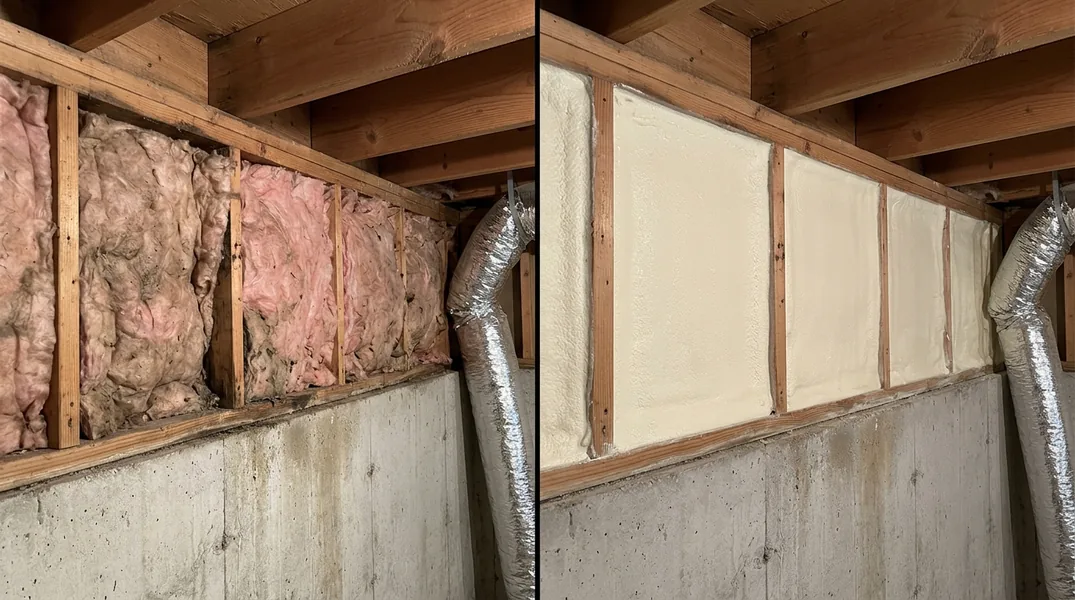
Why Rim Joists and Basements Are Your Biggest Winter Energy Leak
If you live in Waterloo and notice your heating bills climbing every winter, you're not alone. Many homeowners focus on attic insulation and forget about one of the most significant sources of heat loss in their homes: the rim joist and basement rim area. This is the band of material that sits on top of your foundation wall, where the first floor frame connects to the basement. It's often left uninsulated or poorly insulated, creating a direct pathway for cold air to infiltrate your living spaces.
The rim joist is particularly vulnerable because it's typically constructed from wood or metal, materials that conduct cold readily. During Waterloo winters, outdoor temperatures can plummet well below freezing, and if your rim joist lacks proper insulation, that cold transfers directly into your basement and the floors above. This thermal bridging effect means your heating system works overtime to compensate, driving up your energy costs. Additionally, cold basements attract moisture and condensation, which can lead to mold growth, structural damage, and an uncomfortable living environment overall.
The Spray Foam Solution for Metal Buildings and Rim Joists
Closed Cell Spray Foam Insulation has emerged as the gold standard for addressing rim joist and basement insulation challenges. Unlike traditional fiberglass batts or blown-in cellulose, spray foam adheres directly to the rim joist, creating an airtight seal that eliminates drafts and thermal bridging. This is especially important in metal building insulation applications, where thermal conductivity is a major concern. The expanding nature of spray foam means it fills every gap, crack, and void around the rim joist, providing comprehensive coverage that traditional insulation simply cannot match.
For homeowners considering upgrades to barndominiums, pole barns, or other non-traditional structures, the best insulation for metal building applications is spray foam. Whether you're dealing with a traditional basement rim joist or a more complex metal building insulation scenario, closed cell foam delivers superior R-value per inch and creates a moisture barrier that protects your foundation and framing from water damage. The density and structural integrity of closed cell foam also means it won't settle or compress over time, ensuring your insulation performance remains consistent for decades.
Closed Cell vs. Open Cell: Which is Right for Your Basement?
When deciding between Closed Cell Spray Foam Insulation and Open Cell Spray Foam Insulation, the application matters greatly. For rim joists and basements, closed cell is almost always the better choice. Closed cell foam has a higher R-value (typically R-6 to R-7 per inch), provides superior moisture resistance, and creates a vapor barrier that prevents water intrusion. Since basements are naturally prone to moisture problems, the moisture-blocking properties of closed cell foam are invaluable. It also adds structural rigidity to the rim joist area, which can improve the overall stability of your home's foundation connection.
Open cell foam, while more affordable, is more permeable and absorbs moisture. This makes it unsuitable for below-grade or rim joist applications where moisture exposure is inevitable. Open cell is better reserved for interior wall cavities or attic spaces where moisture control is less critical. In the context of pole barn insulation or barndominium insulation projects, closed cell remains the superior choice for any area that might experience temperature fluctuations or moisture exposure. The slightly higher cost of closed cell foam is justified by its longevity, performance, and protection of your home's structural integrity.
How Spray Foam Prevents Heat Loss and Reduces Energy Bills
The physics of heat loss through rim joists is straightforward: warm air inside your home rises and escapes through any gap or uninsulated surface. The rim joist, being at the boundary between your heated interior and the cold exterior or unheated basement, is a critical thermal weak point. By applying spray foam to the entire rim joist area, you create a continuous insulation layer with no thermal bridges. This means heat stays inside your home where it belongs, and your furnace doesn't have to work as hard to maintain comfortable temperatures.
Homeowners in Waterloo typically see energy savings of 10 to 20 percent after addressing rim joist and basement insulation, depending on the current condition of those areas. The airtight seal created by spray foam also reduces air infiltration, which accounts for a significant portion of residential heat loss. Beyond the immediate comfort improvements, this efficiency translates to lower heating costs month after month, year after year. Over the lifespan of the insulation, which can exceed 50 years for properly installed closed cell foam, the return on investment becomes substantial.
Steel Building Insulation and Modern Construction Challenges
Modern construction increasingly incorporates metal components, whether in traditional homes with metal rim joists or in specialized structures like barndominiums and pole barns. Steel building insulation presents unique challenges because metal conducts heat extremely efficiently, making thermal bridging a serious concern. Traditional insulation methods struggle with metal framing because they cannot form a complete seal around the metal surfaces. Closed Cell Spray Foam Insulation bonds directly to metal surfaces, eliminating air gaps and creating a continuous thermal barrier that prevents heat transfer through the metal itself.
If you're planning a pole barn renovation or designing a barndominium, understanding the best insulation for metal building applications is essential to long-term comfort and efficiency. Spray foam's ability to adhere to metal, wood, and concrete makes it ideal for the complex geometry of metal buildings. It also provides structural benefits, adding rigidity to metal framing and protecting it from corrosion by creating a sealed environment. For homeowners and builders considering metal building insulation projects, spray foam delivers performance that no other insulation type can match.
Getting Professional Help: Spray Foam Installation Near You
While the benefits of spray foam insulation are clear, professional installation is essential. Spray foam application requires specialized equipment, training, and expertise to ensure proper expansion, coverage, and safety. Attempting DIY spray foam installation can result in incomplete coverage, improper expansion, and wasted material. More importantly, improper installation can create health and safety hazards. The professionals at Waterloo Spray Foam Insulation have the knowledge and equipment to assess your rim joist and basement situation, recommend the appropriate spray foam type, and execute a flawless installation.
If you're ready to stop losing heat through your rim joist and basement, Waterloo Spray Foam Insulation is here to help. We serve the Waterloo area with professional spray foam insulation services tailored to your home's specific needs. Whether you're dealing with a traditional basement rim joist, a metal building insulation project, or a barndominium renovation, our team has the expertise to deliver results. Contact us today at (319) 349-2560 or visit our website to request a free estimate and learn more about our pricing options.
Looking for a professional spray foam insulation contractor in Waterloo? Waterloo Spray Foam Insulation responds fast for all your spray foam insulation needs.
Get a Free Quote