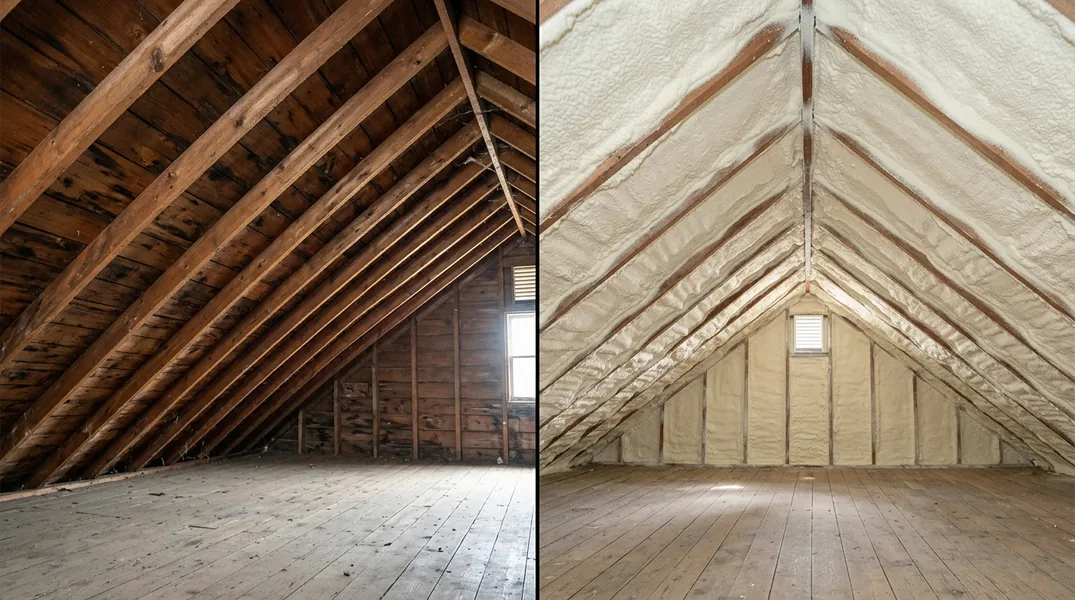
Understanding the Difference Between Air Sealing and Spray Foam
When homeowners in Waterloo start thinking about improving their attic insulation, they often encounter two main approaches: traditional air sealing and spray foam insulation. While both methods aim to reduce energy loss, they work in fundamentally different ways and serve different purposes in your home's thermal envelope.
Air sealing focuses on identifying and plugging air leaks using caulk, weatherstripping, and foam sealant around penetrations like electrical outlets, pipe chases, and ductwork. This approach stops conditioned air from escaping through cracks and gaps. Attic Spray Foam Insulation, by contrast, creates both an air barrier and a thermal resistance layer simultaneously. Spray foam expands to fill cavities and seal gaps while providing insulation value, making it a dual-purpose solution that addresses both air infiltration and heat transfer in a single application.
Spray Foam Insulation R Value Per Inch: What You Need to Know
One of the most important metrics for comparing insulation products is the R-value per inch, which measures how effectively a material resists heat flow. Understanding this number helps Waterloo homeowners make informed decisions about which insulation type best suits their needs and budget.
Closed Cell Spray Foam Insulation typically delivers between 6.0 and 7.0 R-value per inch, making it one of the highest-performing insulation materials available. This superior performance comes from the dense cell structure that traps air and resists heat transfer more effectively than traditional fiberglass batts, which offer only 3.2 to 3.8 R-value per inch. Open Cell Spray Foam Insulation falls in the middle range at around 3.5 to 3.6 R-value per inch but offers better air sealing properties and greater flexibility, making it ideal for certain applications where moisture management is a concern.
The higher R-value per inch of closed cell foam means you need less material to achieve the same thermal resistance as traditional insulation. For example, 5 inches of closed cell spray foam provides roughly R-35 performance, whereas you would need nearly 11 inches of fiberglass batts to achieve comparable results. This efficiency makes spray foam particularly valuable in attics where space is limited or where maximum insulation value is needed without excessive thickness.
R Value Requirements by State: What Waterloo Homeowners Must Know
Iowa's energy code requirements, which apply to homes throughout Waterloo and surrounding areas, specify minimum attic insulation levels based on climate zone and building type. For most residential applications in Iowa, the recommended attic insulation level is R-38 to R-49, depending on your specific location and the age of your home. These requirements exist to ensure that homes maintain reasonable energy efficiency and comfort levels throughout Iowa's cold winters and warm summers.
Understanding your local R-value requirements is crucial because it determines how thick your insulation needs to be and which products will meet code. If you're planning any attic work or considering an upgrade, checking with your local building department ensures your project complies with current standards. Many homeowners discover that their existing insulation falls short of current recommendations, especially in older homes where insulation has settled or deteriorated over time. This gap between what's currently installed and what's recommended represents a significant opportunity for energy savings and improved comfort.
When comparing air sealing alone versus full spray foam installation, remember that air sealing typically doesn't add R-value to your insulation system; it simply prevents air movement that would bypass existing insulation. To meet Iowa's R-value requirements, you'll need actual insulation material in place, whether that's traditional batts, blown-in cellulose, or spray foam. This is why many Waterloo homeowners choose spray foam as a comprehensive solution that addresses both air sealing and R-value requirements in a single project.
How Thick Should Spray Foam Be: Determining the Right Depth for Your Attic
The thickness of spray foam insulation you need depends on several factors, including your local R-value requirements, the type of spray foam you choose, and your energy efficiency goals. Since closed cell spray foam delivers approximately 6.5 R-value per inch, achieving R-38 would require roughly 5.8 inches of material. If you're aiming for the higher R-49 standard, you'd need approximately 7.5 inches of closed cell foam. Open cell spray foam, with its lower R-value per inch, would require greater thickness to achieve the same thermal resistance.
Most attic spray foam applications in residential homes range from 4 to 8 inches in depth, with the exact thickness tailored to your specific situation. Factors like existing insulation, ventilation requirements, and clearances for roof trusses influence the final depth. It's important to note that spray foam shouldn't completely seal your attic from all air movement if you have a vented roof assembly; proper ventilation is essential to prevent moisture buildup and wood rot. A qualified contractor installing Attic Spray Foam Insulation will ensure your installation meets code requirements while maintaining proper ventilation.
Many homeowners wonder whether thicker is always better. While additional insulation does increase R-value, there are diminishing returns and practical limits. Your contractor can help determine the optimal thickness that balances energy savings, cost, and structural considerations specific to your home's attic configuration.
Insulation Tax Credits and Rebates: Making Your Project More Affordable
One of the most overlooked advantages of upgrading your home's insulation is the potential for tax credits and rebates that can significantly reduce your out-of-pocket costs. Federal tax incentives for energy-efficient home improvements, including insulation upgrades, have been available to homeowners making qualifying improvements to their primary residences. These credits can cover a percentage of your material and labor costs, making a spray foam project substantially more affordable than the sticker price suggests.
Beyond federal incentives, many utility companies serving Waterloo and the surrounding region offer rebate programs for energy-efficient home improvements. These rebates reward homeowners for taking steps to reduce their energy consumption, and attic insulation upgrades frequently qualify. The combination of federal tax credits and local utility rebates can sometimes offset 20 to 30 percent of your total project cost, making spray foam insulation a much more attractive investment than it might initially appear.
When evaluating pricing for your insulation project, always ask your contractor about available incentives. Waterloo Spray Foam Insulation can help you understand which credits and rebates you may qualify for and how they apply to your specific project. It's worth scheduling a free estimate to discuss these financial incentives and see how they can make your energy upgrade more affordable. Call (319) 349-2560 to learn more about current programs available in your area.
Air Sealing vs Full Spray Foam: Which Solution Is Right for Your Waterloo Home
So which approach makes sense for your situation? The answer depends on your current insulation condition, your budget, and your energy efficiency goals. If your attic already has adequate insulation but you notice drafts, temperature variations between rooms, or high energy bills, air sealing alone might address the problem. Strategic air sealing can dramatically improve comfort and energy efficiency without the investment required for full insulation replacement.
However, if your attic insulation is thin, settled, or inadequate compared to current standards, air sealing alone won't solve the problem. You'd still be losing significant heat through inadequate insulation, making your energy bills high regardless of how well you seal air leaks. In these situations, full Attic Spray Foam Insulation offers a comprehensive solution that seals air leaks while simultaneously providing the thermal resistance your home needs.
Many homeowners find that the ideal approach combines both strategies. Air sealing addresses obvious gaps and penetrations, while spray foam provides superior insulation value and additional air sealing throughout the attic. This combination approach often delivers the best results in terms of comfort, energy savings, and long-term performance. The investment in spray foam typically pays for itself through reduced energy bills within 5 to 10 years, and the comfort improvements are often noticeable immediately.
Ready to determine the best insulation strategy for your Waterloo home? Contact Waterloo Spray Foam Insulation today at (319) 349-2560 or visit our website to request a free estimate. Our experienced team will assess your current situation, explain your options, and help you make an informed decision that maximizes your comfort and energy savings.
Looking for a professional spray foam insulation contractor in Waterloo? Waterloo Spray Foam Insulation responds fast for all your spray foam insulation needs.
Get a Free Quote